Featured Projects

From an unmet clinical need to a working device.

Each project names the problem it addresses, the technical or clinical approach taken, and the impact it aims for. Two flagship ventures, Nephrova and Medistant, anchor a broader program in operating-room devices and monitoring systems.

P1

Nephrova, Intraoperative Kidney-Oxygenation Monitoring

A monitoring system that makes the kidney visible in real time during surgery, measuring urinary oxygen and flow as an actionable surrogate for renal hypoxia risk.

Problem
AKI is one of the most common and costly complications of cardiac surgery, yet today's markers diagnose it hours to days after injury has begun.
Approach
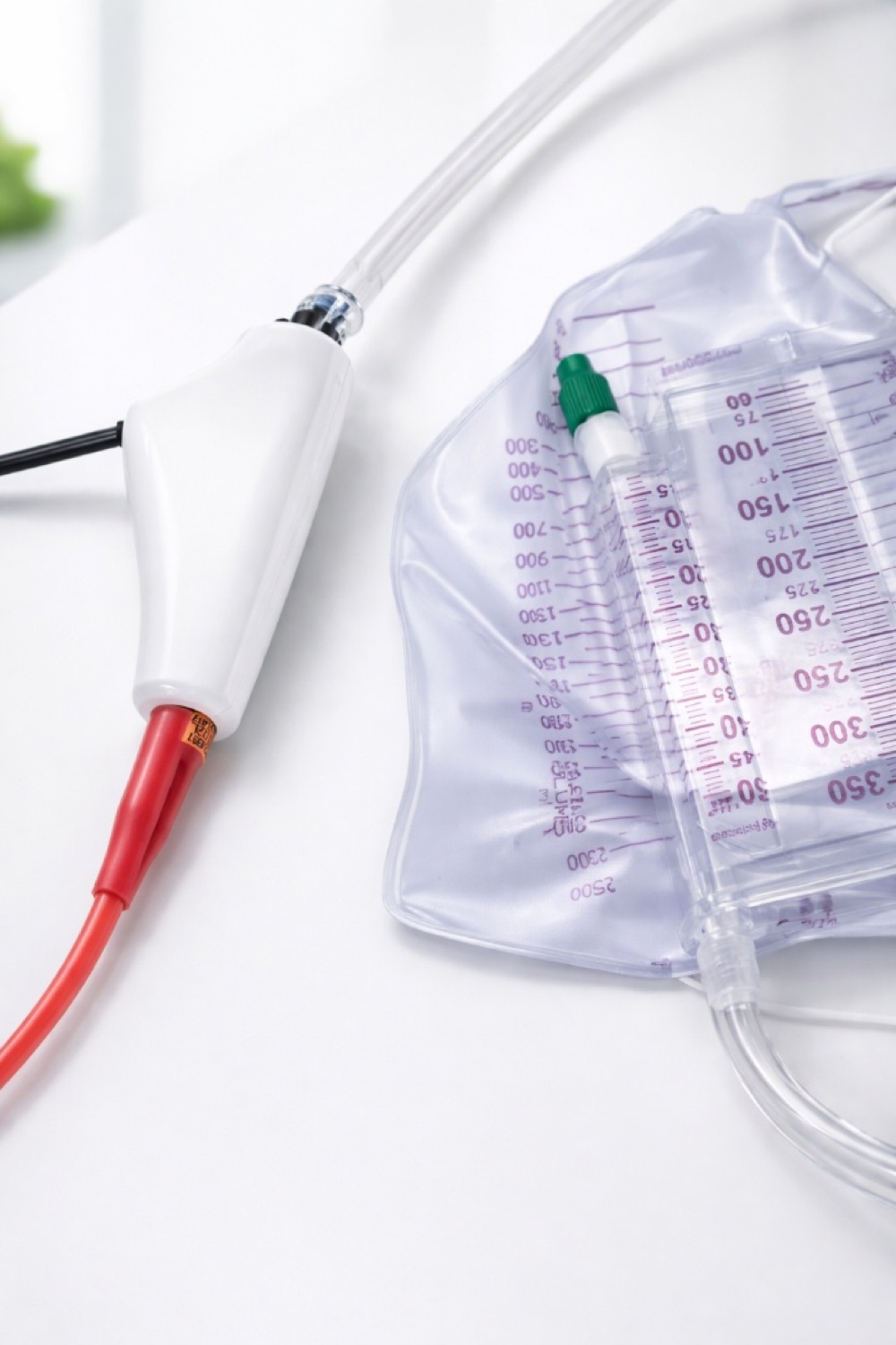
An inline sensing module between the urinary catheter and collection bag, using optical oxygen sensing (dynamic luminescence quenching), thermal flow sensing, and signal-processing algorithms.
Impact
Continuous, interpretable renal-oxygen monitoring that fits standard OR workflow without disrupting care.
Scientific Reports 2026 ANESTHESIOLOGY 2026 PCT & U.S. patents
Nephrova inline urinary-oxygen sensing module connected between a urinary catheter and a collection bag
Inline sensing module · prototype
P2

Diffusion-Corrected Urinary PO₂ Sensing

A physics-based correction that removes oxygen-diffusion artifacts from urinary oxygen tension, restoring the diagnostic value of a bedside reading.

Problem
Oxygen diffuses across the catheter and collecting system, biasing measured urinary PO₂ away from the kidney's true state.
Approach
A model of oxygen diffusion in the urinary pathway that corrects measured PO₂ back to its renal source, validated against laboratory references.
Impact
More trustworthy bedside monitoring and improved AKI discrimination after cardiac surgery.
Scientific Reports 2026 STA 2026 U.S. Provisional Patent
P3

Urine Transit-Time Algorithm for AKI Detection

An algorithm that establishes whether a bedside urine sample is fresh enough to reflect the kidney at all.

Problem
Bedside urinary oxygen reflects renal status only when the sample is fresh; pooled or delayed urine corrupts the signal.
Approach
A laboratory-validated algorithm that tracks urine transit time through the catheter, assessing sample validity and timing.
Impact
Enhanced renal monitoring and earlier, more reliable AKI risk assessment in cardiac surgery patients.
J. Clinical Monitoring & Computing 2025 STA 2025 PCT WO2026060269A1
P4

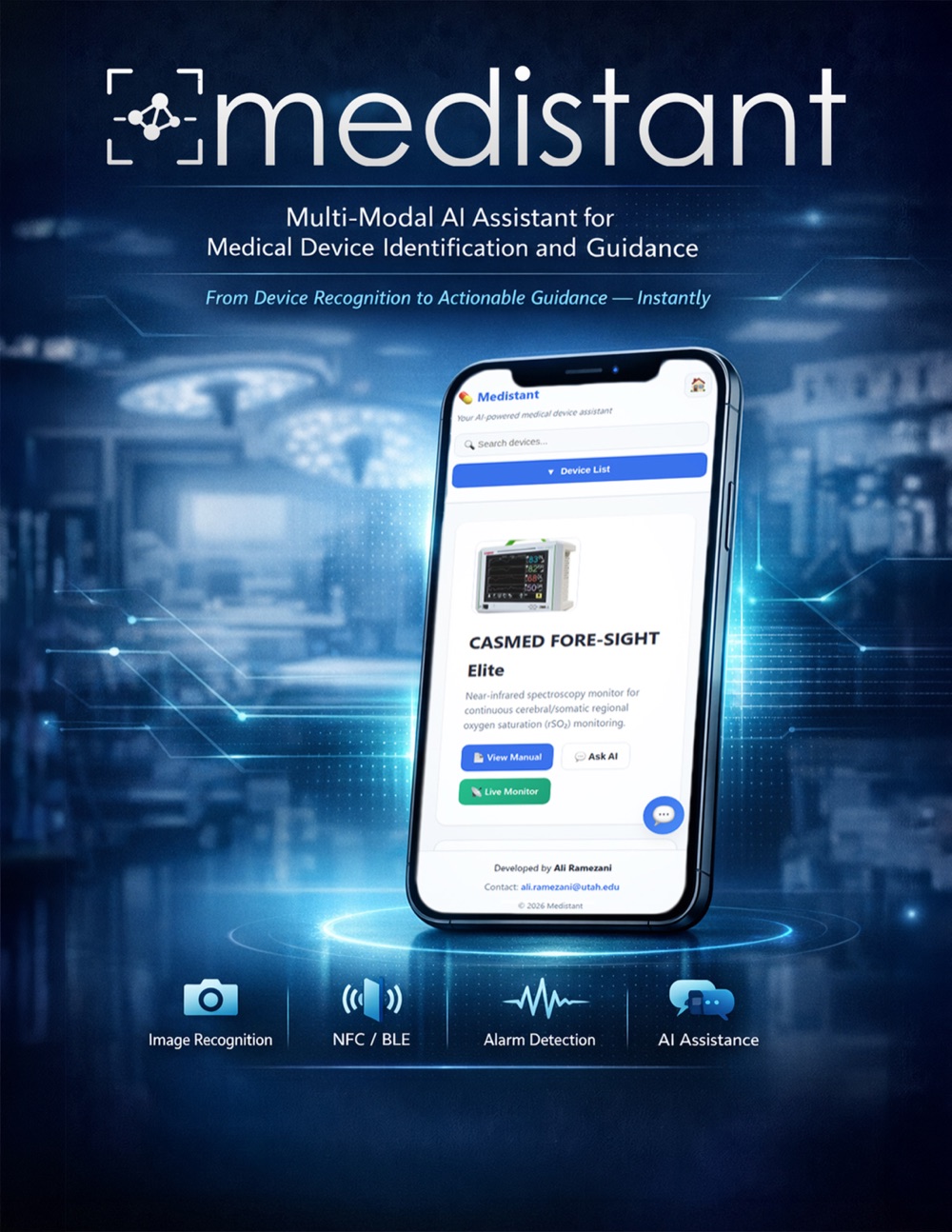
Medistant, Device Identification & Guidance in the OR

A multimodal, software-first assistant that turns a photo, QR scan, NFC tap, or alarm event into the correct device page in seconds.

Problem
Perioperative teams work around unfamiliar monitors, pumps, and vendor interfaces, relying on memory, paper manuals, and informal support when fast, trustworthy information matters most.
Approach
Identify the device first, then surface its manual, checklist, alarm references, and a device-scoped AI assistant grounded in manufacturer materials.
Impact
Faster, safer device use at the point of care; already advanced into a working browser-based prototype.
STA 2026 Multimodal AI Working prototype
Medistant mobile app showing a recognized medical device with its manual and AI assistant
Medistant app · device page
P5

Urine Oxygen-Guided Resuscitation in Hemorrhagic Shock

Using kidney oxygenation as a live target for resuscitation, rather than a finding discovered after the fact.

Problem
During hemorrhage the kidney is an early casualty of falling perfusion, yet renal oxygenation is rarely monitored as resuscitation unfolds.
Approach
In a porcine hemorrhagic shock model, urinary oxygen guides fluid and vasopressor therapy toward restoring renal perfusion.
Impact
Potential to steer resuscitation by organ-level oxygenation, protecting the kidney during critical bleeding.
Submitted to Anesthesiology 2026 Shock Society 2026
P6

Rapid Gas-Phase Calibration of Urinary Oximeters

Making the urinary oximeter clinic-ready by collapsing calibration time without sacrificing accuracy.

Problem
Fluorescence-quenching urinary oximeters need accurate calibration to be trustworthy, but slow calibration is impractical in a busy clinical setting.
Approach
A rapid gas-phase calibration method that brings the oximeter to reliable readiness quickly and reproducibly.
Impact
Shorter setup and more dependable readings, easing the path from bench sensor to bedside tool.
STA 2026 Sensor calibration

The peer-reviewed record behind the work.

Journal articles, manuscripts under review, and conference presentations document each project's evidence base.